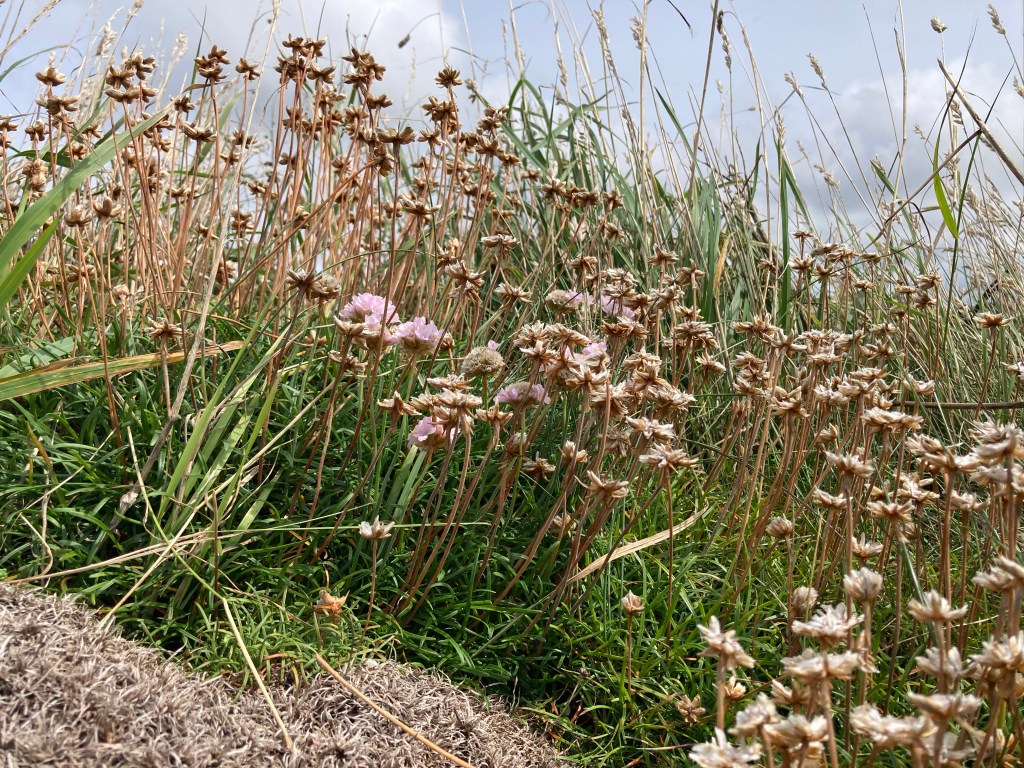
We started at the top of the cliffs, looking out over the pale bay with its jagged spikes of rock. There were people tiny on the sand but we stayed on the cliff path, following the edge of a field. The path was like a long drag of claw marks and the verges were full of the yellow hearts of toadflax, the dried brown heads of sea thrift, no longer pink.
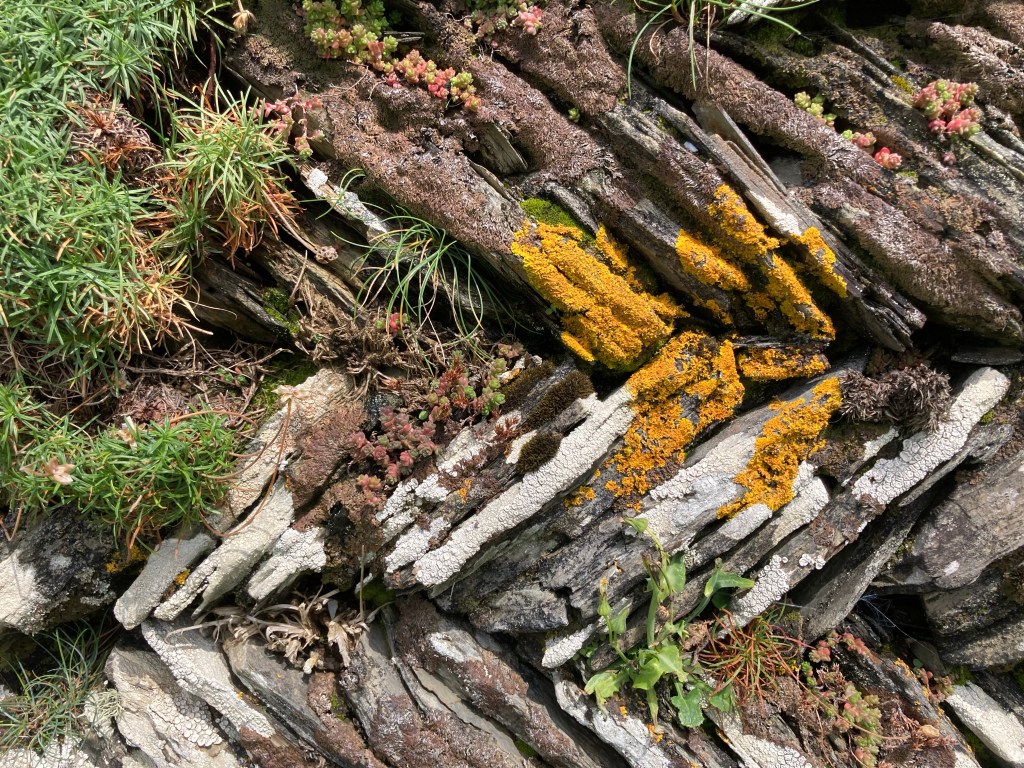
We walked beside a wall that was coloured by lichen, it’s weathered stones slotted on diagonals to make a wide zig zag. The sea was beside us and we could see the white water where the waves crashed in at the base of the stacks or where rocks were high beneath the water. We rounded the cliff edge and descended to a small bay, mostly rock at low tide, with a small river running out to sea. We wobbled across on treacherous stepping stones, then climbed the other side.
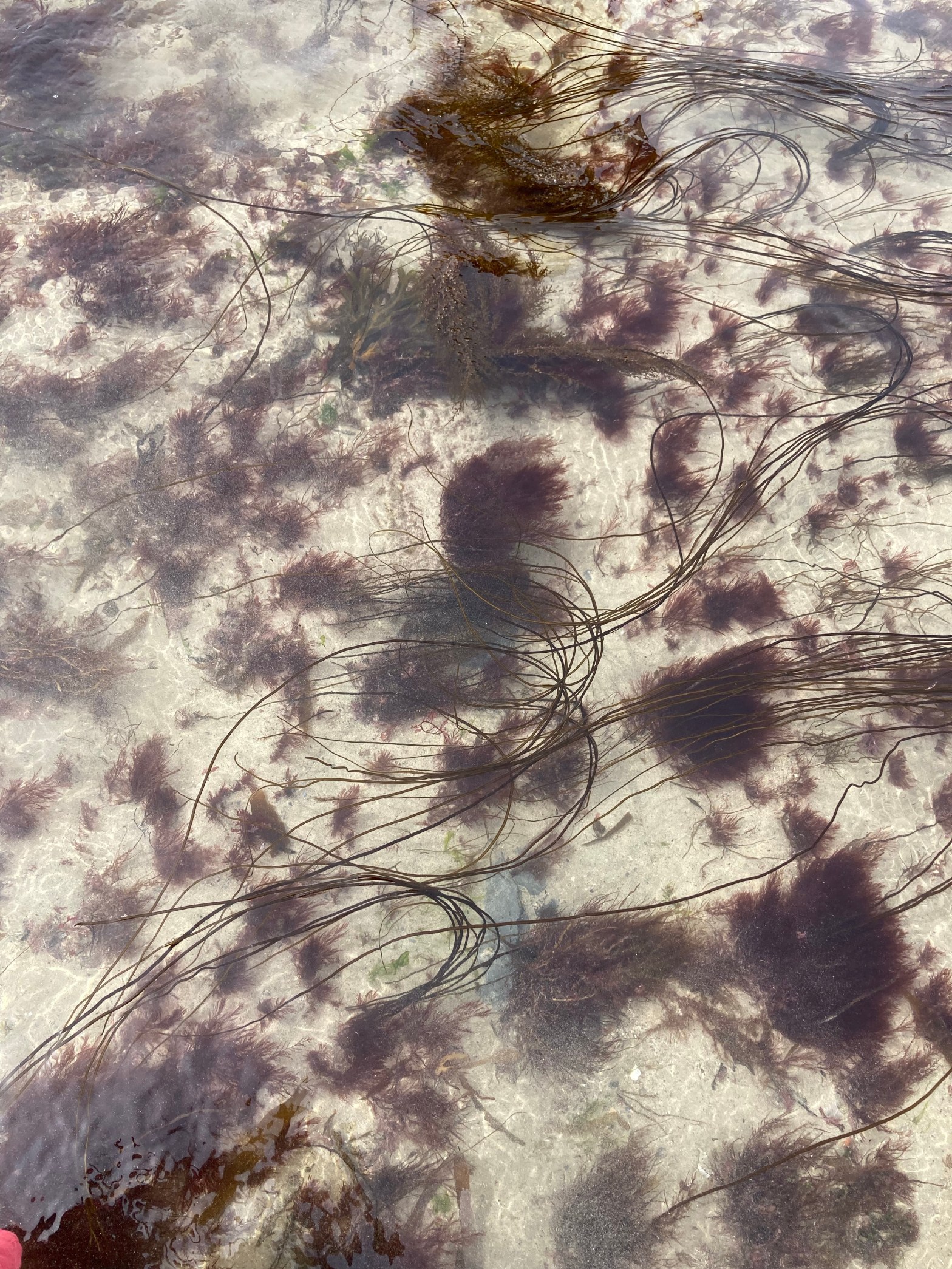
We could see the tide pool then, out on the rocky islands off-shore. After a bit of time, we worked out how to get down. There was a channel of water separating us from the islands and we took our shoes off to wade over. Brown thong weed streamed like hair around our legs as we crossed. We changed and took the first few steps into the pool.
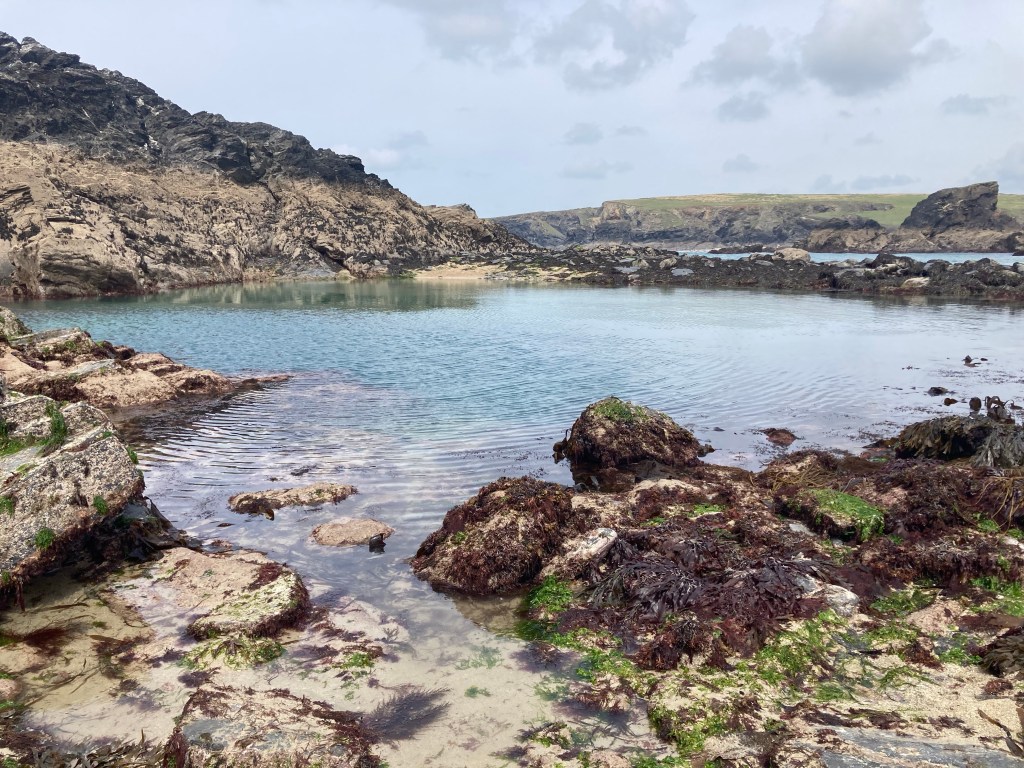
Then the rock ran out, the bottom suddenly plunging down, like the drop off in Finding Nemo. We dove in, went down to where huge wings of kelp waved, then back to the shallows where we found anemones. From the shelter of the pool, we could hear waves crashing into a hidden inlet.
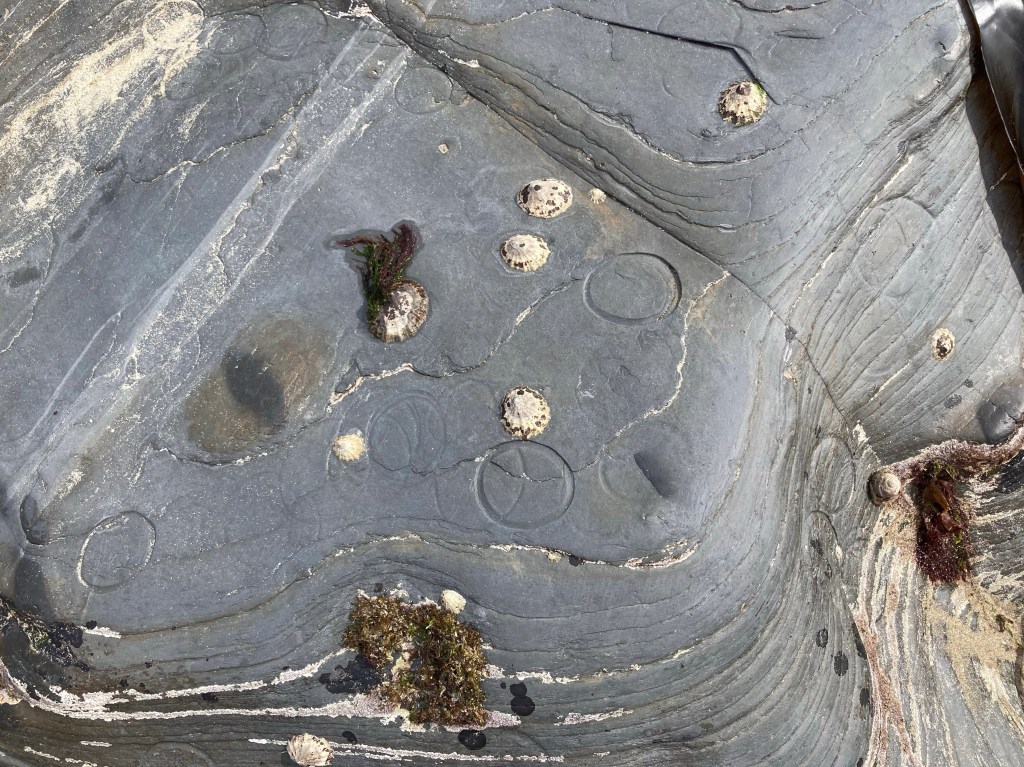
When we got cold we climbed out to change and wade back across before the tide turned. As we changed, we noticed the round home scars of limpets, their circles carved deep into the rock.
 Bonnie Radcliffe