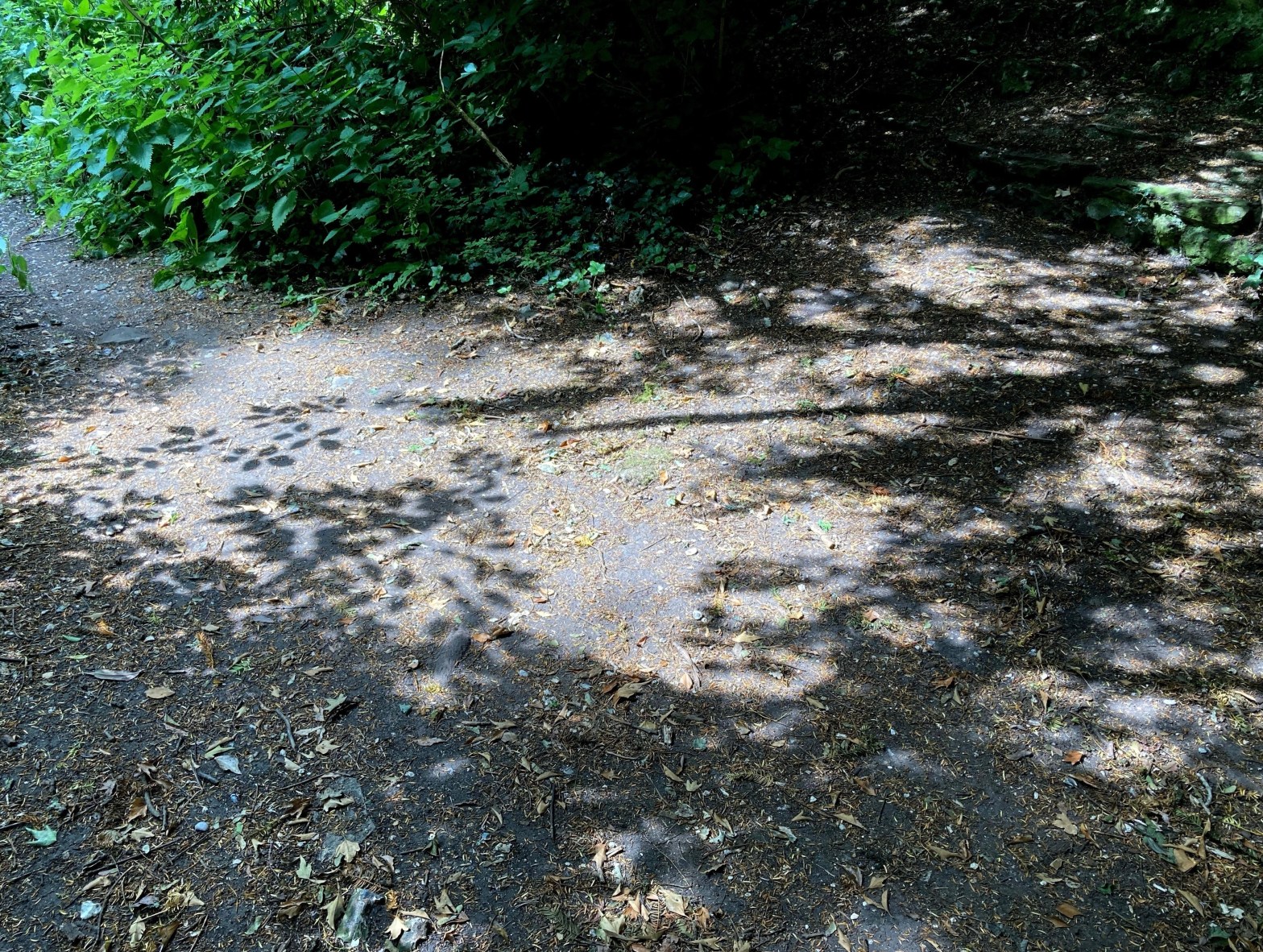
At the weekend we went to the old Roman town of Silchester. From the car park, the path followed the edge of a field, where circular bales of hay stood proud on the fresh shorn grass, now yellow from the sun. Through a couple of gates we turned right, following the bridleway where it dipped through the trees. The track narrowed and twisted and then we saw the first bit of the old Roman city wall, the roots of a tree lunging out above it.
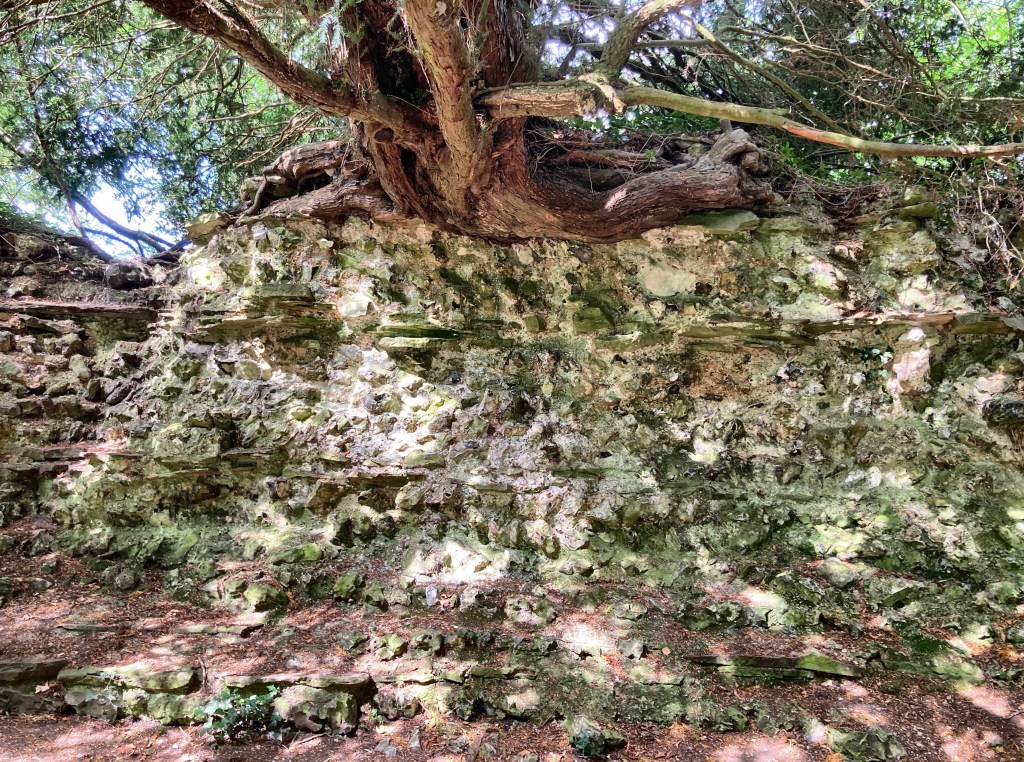
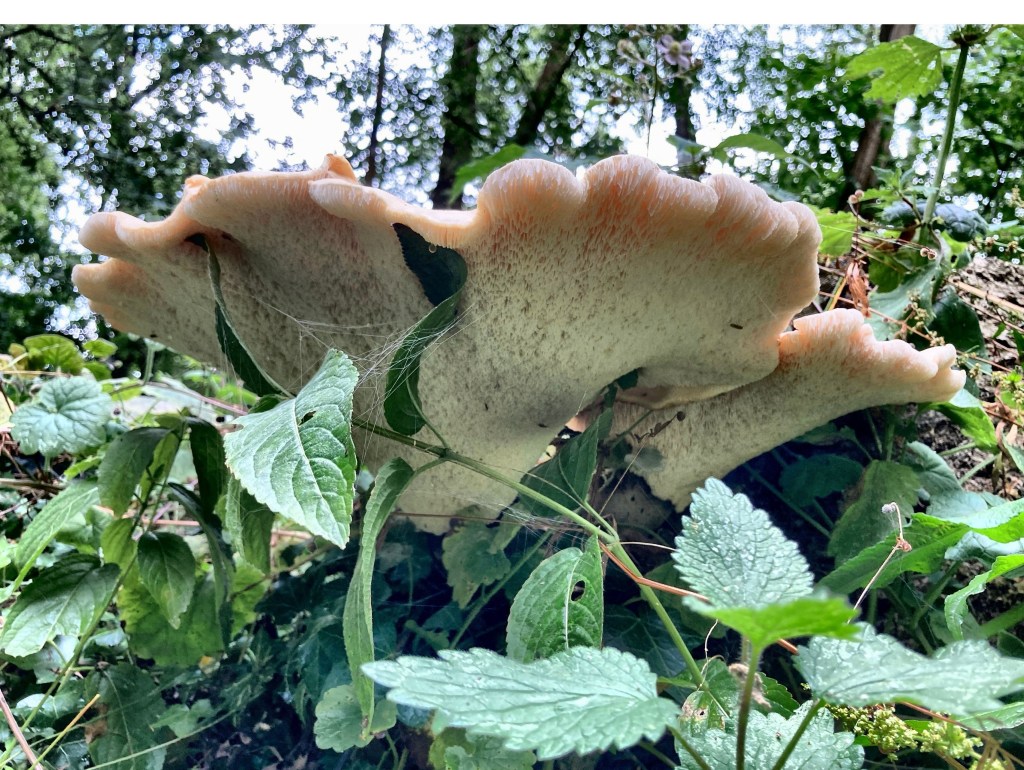
The leaves overhead cast speckled shadows on the mud. Around us in the undergrowth were the discarded limbs of long dead trees, now covered with creepers and spouting delicate shelves of white fungi. There was an insistent trilling – a grasshopper warbler perhaps – its call repeated, urgent above the rest of the birdsong. After our first sight of the wall we kept coming across sections of it, above us on our left, until finally we came out of the woods and it was stretching away from us, continuous, towering high.
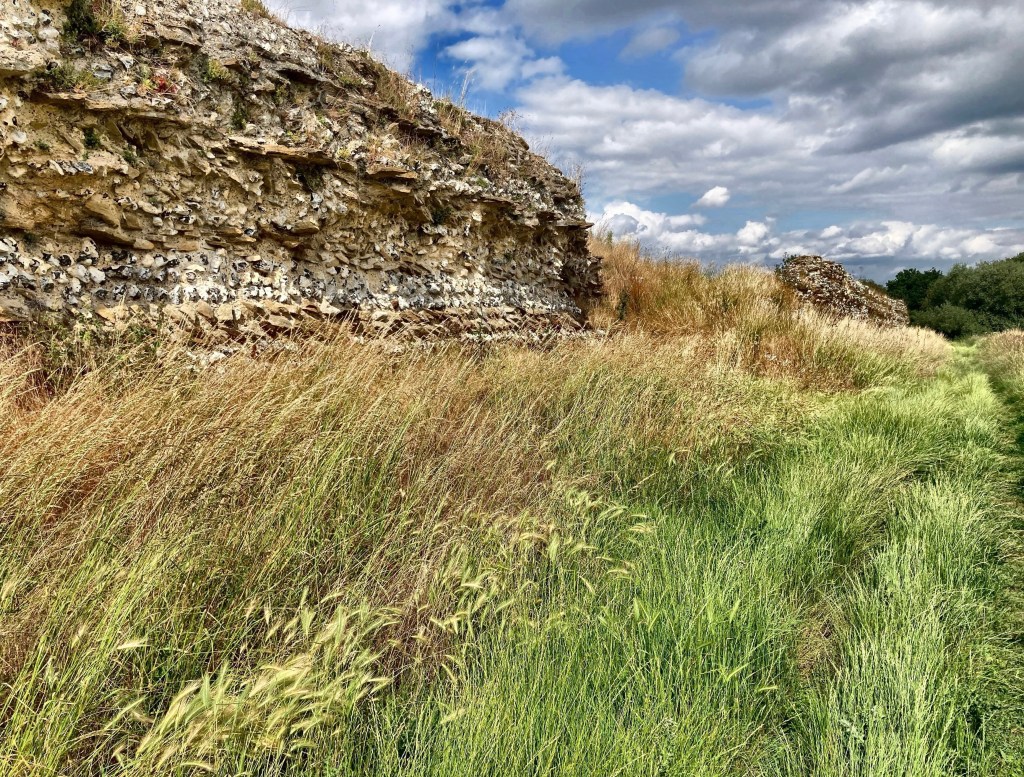
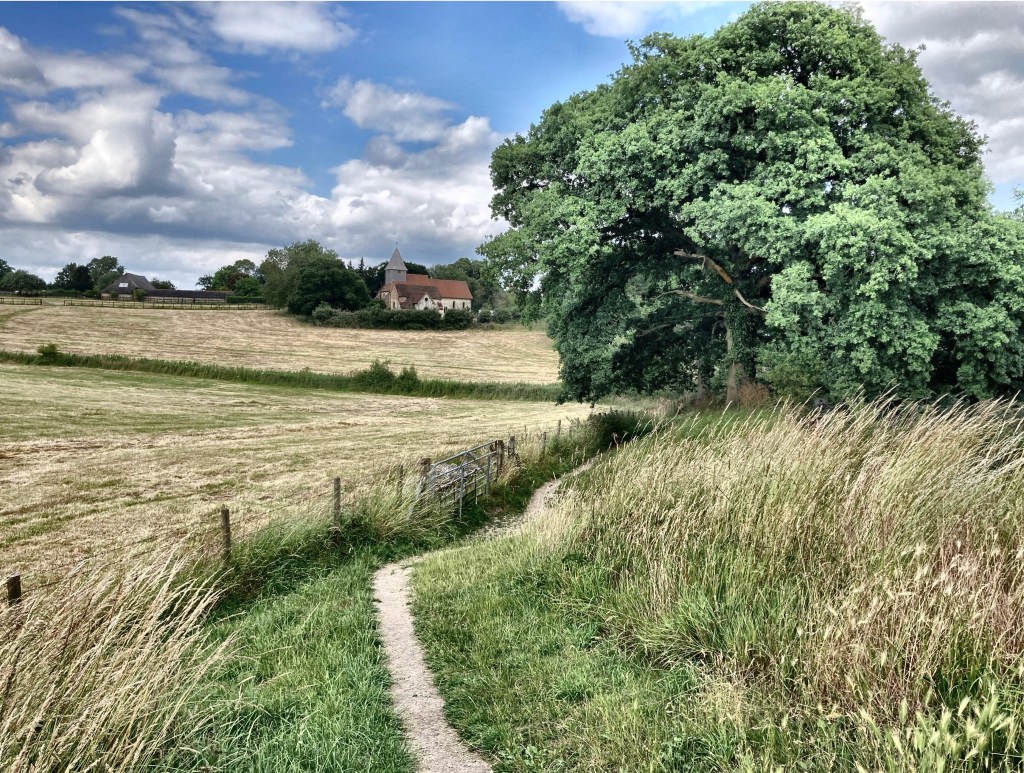
The path ran in a ditch beside it. The long golden grass rustled and danced in the wind and butterflies – white and blue and peacock colored – fluttered up and out as we passed. There were thistles dotted around, their purple flowers bursts of colour, and cow parsley, hog weed and bind weed adding white. We found a gap and climbed to the top of the mound, so we were level with the wall. From there we could see the size of the space the wall encompassed, divided into a patchwork of fields. There was a church ahead and the path curved towards it, narrowing at points to a scramble past snagging brambles.
We went through the church yard, then a farm yard and met a horse and rider on the road, before we found our way back to the wall. The path was thin, a tiny track edged either side with neck high nettles and we squeezed our way through, stepping carefully as we made our way back to the car.
 Bonnie Radcliffe