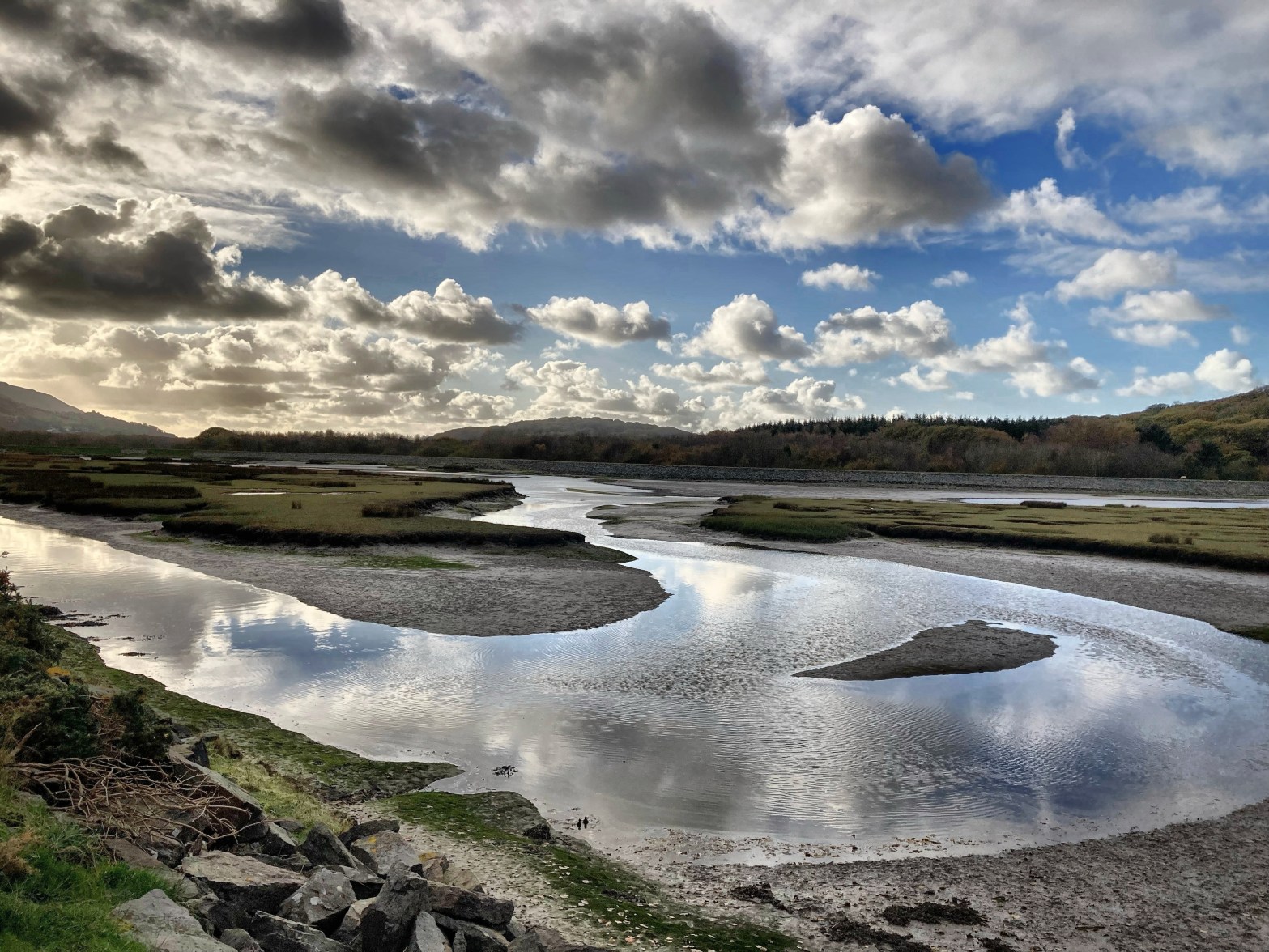
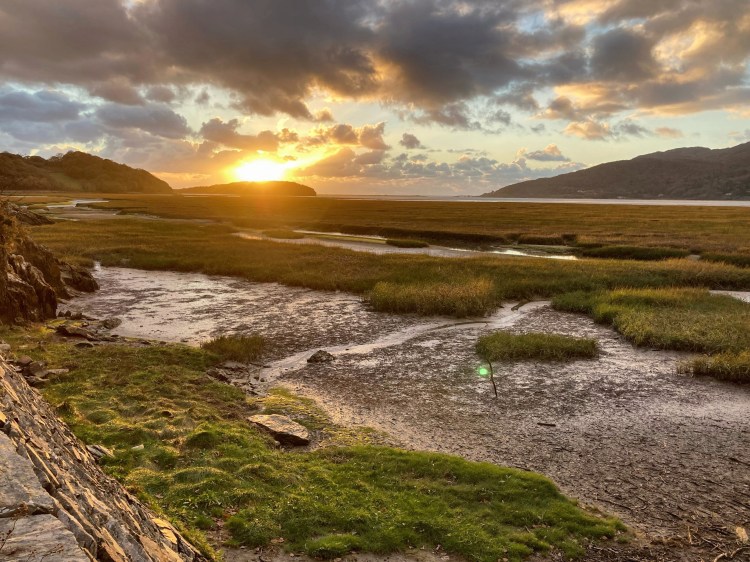
We went back up the estuary, away from the sea, towards the mud flats. We saw a curlew pecking at the sand, running as if slightly off balance. We passed yesterday’s spindle bushes and sea defences and carried on, further up, looking for more. The landscape is fascinating because it is a place of such changes; the mud left rippling wet hours after the water has fled, seemingly low lying humps still visible at almost high tide. We passed the remains of a building, roofless, right on the banks, it’s walls crumbling. I go in, clamber over fallen bricks that once made rooms, duck under the limbs of a not so little tree, grown tall since the time this house fell. The remaining walls are built of big old stones, not something that feels reminiscent of a military past; this feels like a home. At the point closest to the estuary the stones have fallen away, a gap toothed grin to the view. Undulating mud banks thick with rushes and gold green grasses stretch away. The light, brighter over Barmouth bridge in the distance, reflects golden in the sinuous pools. We stop on a bench to draw. A noise, right by my ear, and I jump; a robin, so close. He hops onto a willow branch right behind me, ducks his head, moves to the bench, down to the floor at our feet. He flits across the path, his wings loudly fluttering, then flies at me, starts at my feet, flies fast up my leg, along my torso, only inches from me, to pass over my head and land in the willow again.
 Bonnie Radcliffe